
Alabama / Inside the court record
Scottsboro: a lawyer’s name was not enough
When the first Scottsboro trial was called on April 6, 1931, the prosecutor announced that he was ready. Nobody answered for the defendants. Lawyers were present, but the court was still sorting out who would take responsibility for the defense. That exchange became central to Powell v. Alabama, the Supreme Court decision that asked what the right to a lawyer actually required.
Read the original court record ↓Six days from indictment to trial
The prosecution grew out of events on a freight train on March 25, 1931. Nine Black youths were taken into custody, and two white women accused them of rape. The indictment followed on March 31. Trials began six days later in a community the Supreme Court described as intensely hostile. Soldiers guarded the prisoners as they were moved between Scottsboro and Gadsden.[1]
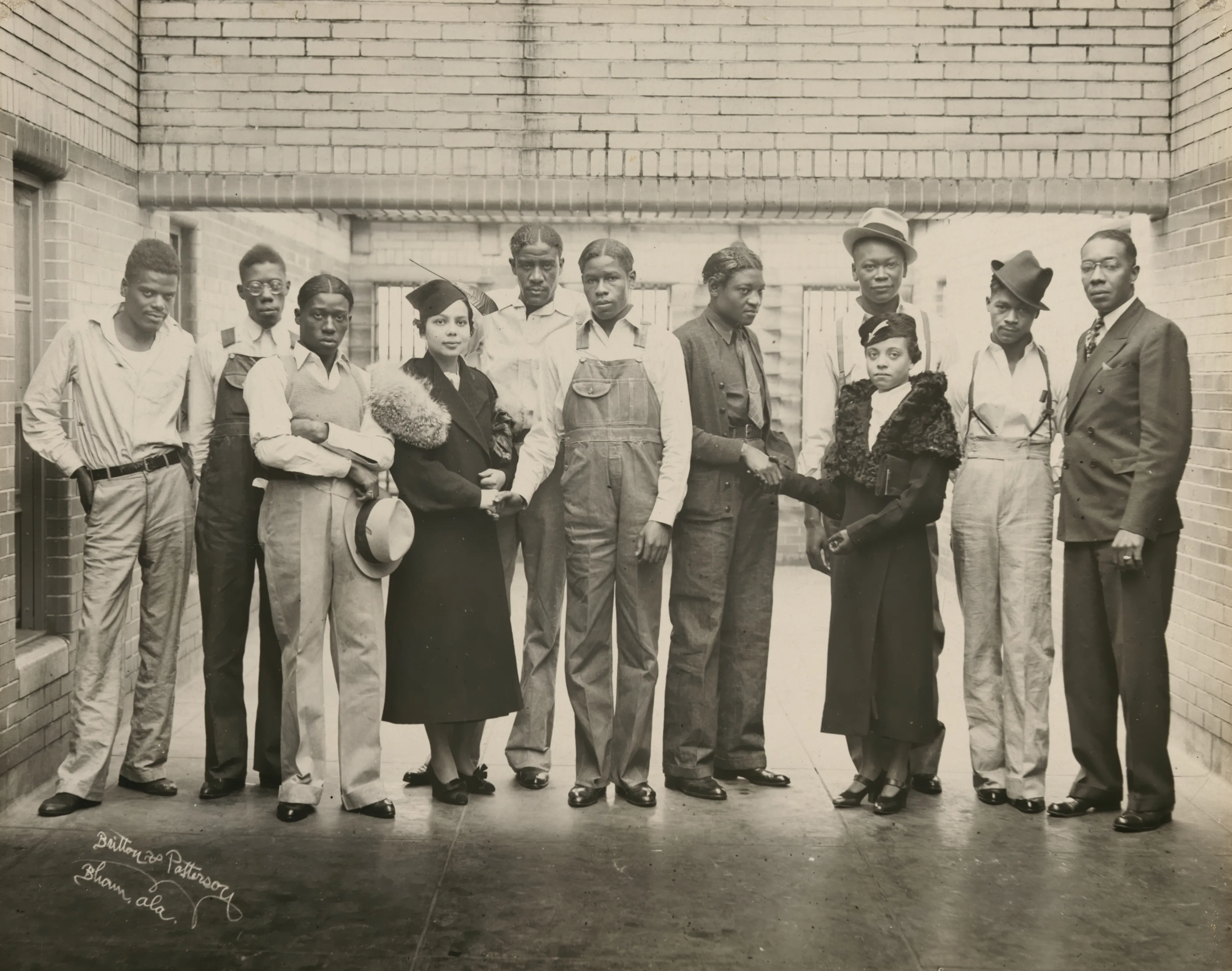
Powell reached the Supreme Court on behalf of seven defendants, including Haywood Patterson, Clarence Norris and Ozie Powell. All seven faced death sentences. The familiar name “Scottsboro Boys” covers nine people, but this particular appeal did not present nine identical judgments. The opinion’s caption and procedural history help keep those individual cases in view.[1]
Who was supposed to prepare the defense?
The trial judge said he had appointed the local bar collectively for the arraignment and expected its members to keep helping if no other lawyer appeared. For the Supreme Court majority, that expectation left the central responsibility unresolved. An appointment addressed to everybody did not give any particular lawyer a clear obligation to investigate, consult the defendants and get ready for trial.[1]
Roddy, a Tennessee lawyer who had come at the request of interested people in Chattanooga, told the court that he had not prepared the case and did not know Alabama procedure. Local lawyer Milo Moody offered to help him. The trial then proceeded. The majority treated the days before trial as a vital part of the defense, not an interval that could be made up by having lawyers at the table when testimony began.[1]
There was a revealing complication: a member of the local bar had accepted work for the prosecution before trial. The majority did not accuse him of bad faith; it noted his understanding that Roddy would represent the defendants. But the episode showed how little a general appointment had settled. A defense needs someone who knows that the investigation is his responsibility.[1]
The disagreement was about the record
Justice Butler dissented, joined by Justice McReynolds. Butler emphasized the lawyers’ conferences with the defendants, their cross-examination and their request to move the trial. He also noted that they had not asked for a postponement. He believed the record failed to establish that they had been denied preparation time.[1]
The majority read the same proceedings differently. A lawyer’s efforts after a hurried assignment did not establish that the defense had received a meaningful chance to investigate beforehand. Nor could a court assume that investigation would have uncovered nothing useful. The disagreement makes the opinion worth reading closely: the presence of legal activity was not, by itself, proof of an adequately prepared defense.[1]
What the 1932 decision changed
On November 7, 1932, the Supreme Court reversed the judgments before it and sent the cases back for further proceedings. It held that due process required an effective appointment of counsel in a capital case under circumstances such as these, where defendants could neither employ a lawyer nor adequately defend themselves. An appointment made too late to permit effective preparation did not satisfy that duty. The Court expressly left other kinds of prosecutions and circumstances undecided.[1]
That reversal was not an acquittal and did not bring the Scottsboro story to an end. Decades later, on November 21, 2013, Alabama’s Board of Pardons and Paroles granted posthumous pardons to Charlie Weems, Haywood Patterson and Andy Wright. Those three pardons were a separate action, not the result announced in Powell.[2]
The question at the heart of Powell was practical as well as constitutional. Who had spoken with the accused? Who had checked the facts? Who had time to decide what to challenge? The opinion located a fair trial partly in work that must happen before the jury hears a word. Reading the courtroom exchange makes that point more concrete than a statement that the defendants simply “had lawyers.”[1]
Sources and references
Original analysis of the Supreme Court opinion and dissent, with the later pardons checked against Alabama’s official agency report. The photograph is separately identified and credited.
- Powell v. Alabama, 287 U.S. 45 (1932)November 7, 1932 · Supreme Court opinion and dissent, Library of Congress U.S. Reports scan
Complete original scan, including the dissent and portions of neighboring cases on shared pages. Contains historical racist language and testimony about alleged sexual violence.
- Alabama Board of Pardons and Paroles, 2012-2013 Annual ReportReports the November 21, 2013 pardon hearing · Official state agency report
Printed page 16 (PDF page 18) names the three men granted posthumous pardons. Linked for that later action, not as part of the 1932 court decision.
This article examines the 1932 right-to-counsel ruling. It does not retell every Scottsboro trial or treat that ruling as the final outcome for all nine defendants.