Louisiana / Inside the court record
Danziger Bridge: the anonymous comments that damaged a prosecution
A prosecution can be damaged by conduct far outside the courtroom. In the Danziger Bridge case, anonymous comments beneath newspaper stories became evidence about the behavior of federal lawyers. The resulting appeal did not excuse the shootings. It asked whether the government had compromised the process through which responsibility was being established.
Read the original court record ↓Two distinct abuses of authority
After Hurricane Katrina, New Orleans officers responding to a report of gunfire shot unarmed civilians on the Danziger Bridge. Two people were killed and four wounded. The subsequent federal prosecution concerned the shootings and a cover-up. Five former officers were convicted at a 2011 trial, but the district judge later set aside those convictions and ordered another trial.[1]
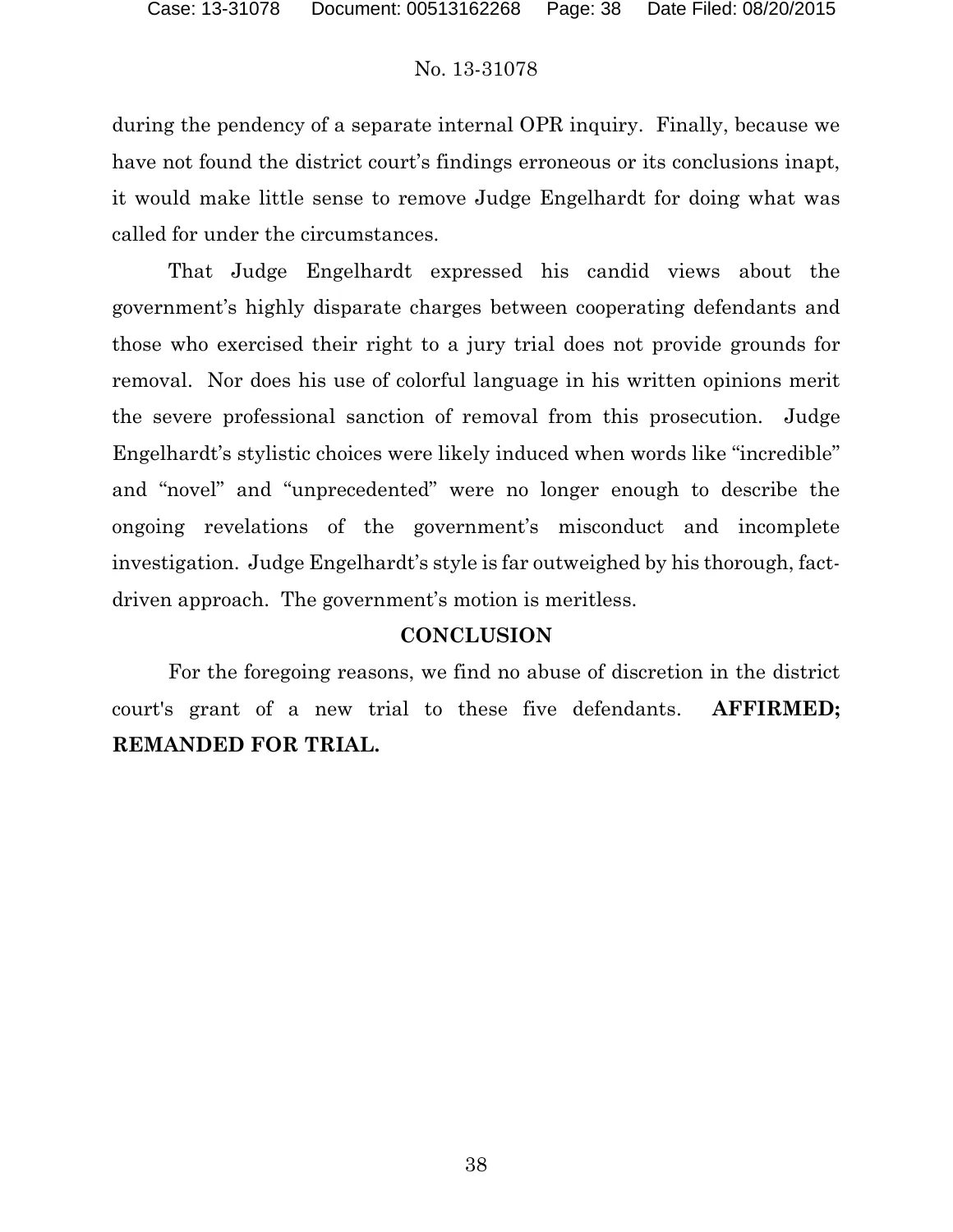
That distinction is central to reading the 2015 appeal. The government was appealing the new-trial order; the court was not deciding that the officers had done nothing wrong. It was reviewing the trial judge’s response to revelations about prosecutors’ anonymous online activity and the government’s handling of the investigation into it.[1]
Readers did not know who was speaking
The opinion recounts how senior federal prosecutor Sal Perricone posted under assumed names on Nola.com, including comments hostile to the defendants, their lawyers and the police department. The activity extended from before the indictments through the trial. Other federal lawyers were later connected to online comments as the inquiry expanded.[1]
The majority rejected the argument that anonymity made the comments less harmful. It reasoned that an apparent insider could shape discussion while concealing the source of the information and bias. The concealment also made the possible influence harder to trace. Its concerns extended beyond seated jurors to cooperating defendants, potential witnesses and other participants in the case.[1]
The disagreement was about the remedy
The Fifth Circuit majority upheld the new-trial order. It emphasized the cumulative circumstances and the uncertainty left by the government’s incomplete investigation. It also rejected professional discipline as a sufficient answer: punishing a lawyer for misconduct did not, by itself, establish that the defendants had received a fair trial.[1]
Judge Edward Prado dissented. He condemned the lawyers’ conduct but argued that the defendants had not met the demanding standard for a new trial based on newly discovered evidence. In his view, the record did not adequately connect the comments to a changed verdict. He also stressed the jury-selection process and the instructions directing jurors to avoid media coverage. The judges disagreed about proof and procedure, not about whether the online conduct was acceptable.[1]
The case did not end with the appeal
In April 2016, the five defendants entered negotiated guilty pleas. Four pleaded guilty to civil-rights and obstruction offenses; former supervisor Arthur Kaufman pleaded guilty to conspiracy and falsification of evidence to obstruct justice. The agreed prison terms ranged from three to twelve years. These later pleas are essential context for an article about the earlier new-trial ruling.[2]
U.S. Attorney Kenneth Polite’s announcement acknowledged that prosecutorial misconduct had undermined the office’s work and credibility. He also said the victims and families had approved proceeding with the agreements. That statement records the prosecutor’s explanation for the resolution; it should not be used to invent a single emotional response shared by every person harmed.[2]
The documentary lesson is specific. The people prosecuting a grave abuse of power must still protect the fairness of the proceeding. In this case, covert efforts to influence public discussion became part of the record that undid the first trial. The later guilty pleas did not make that failure disappear.[1][2]
Sources and references
Original companion analysis researched from the primary records identified here. A court opinion recounts the record before that court; it is not a complete investigation file.
- United States v. Bowen, No. 13-31078August 18, 2015; revised August 20, 2015 · United States Court of Appeals for the Fifth Circuit
- Remarks following guilty pleas and sentences in the Danziger Bridge caseApril 20, 2016 · U.S. Attorney Kenneth A. Polite, Eastern District of Louisiana
Analysis of the revised August 2015 opinion, including its dissent, followed by the separately documented April 2016 guilty pleas and sentences. No claim about present custody or later supervision.