
Massachusetts / From the archive
Elizabeth Johnson Jr.: the name a later law had to add
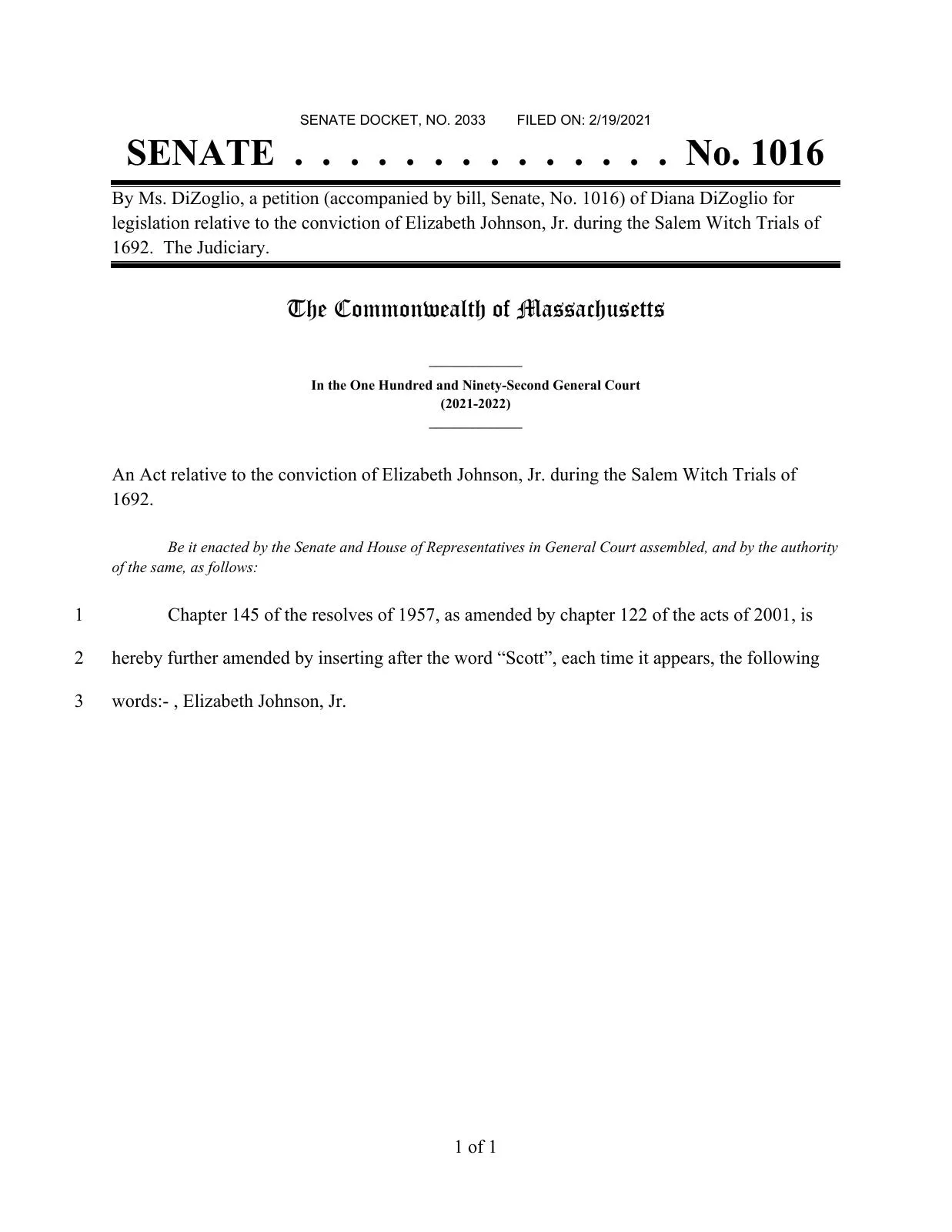
The operative language of the 2021 bill took only three lines: add Elizabeth Johnson Jr.’s name to an earlier Massachusetts resolve. A version of that amendment became part of the enacted fiscal 2023 budget. Beside it, the surviving record of Johnson’s 1692 examination is long, crowded with accusations and written through other people’s hands. Reading the two together reveals the distance between recording an accusation and repairing its official legacy.
Read the original court record ↓Whose words survived?
The University of Virginia’s Salem Witch Trials archive presents two examination texts for Elizabeth Johnson Jr., dated August 11, 1692. One is identified as a copy. The longer record carries Simon Willard’s attestation that he took down the substance of what she said. A later oath calls it a true copy of that substance to the best of his knowledge. Those qualifications are part of the evidence.[1]
The text records statements about signing a devil’s book, attending a supposed gathering and harming people through witchcraft. They are accusations and attributed confessions within a witchcraft prosecution, not verified supernatural events. A reader cannot responsibly turn them into an account of things that actually occurred simply because a court official wrote them down.[1]
The form also matters. Questions and answers sit beside summaries, later attestations and notes about ownership before the grand jury. Johnson’s age is recorded as 22 in response to a question. The document offers a trace of a particular woman caught in the proceedings, but it is not a private diary or a modern verbatim recording of an interview.[1]
Names inside a later statute
Massachusetts revisited the official legacy of the trials through legislation. In 2001, an act amended a 1957 resolve by replacing a reference to Ann Pudeator and unspecified other people with a list of names. The list included Bridget Bishop, Susannah Martin, Alice Parker, Margaret Scott and Wilmot Redd. Elizabeth Johnson Jr. was not named in that amendment.[3]
Senate Bill 1016, filed in 2021, proposed adding Johnson after Scott wherever that name appeared in the earlier resolve. The accompanying petition identified Senator Diana DiZoglio as its presenter. The PDF preserved here contains both the petition page and the proposed bill. It is a record of a proposal, so its printed legislative formula should not be mistaken for proof that this particular bill itself became law.[2]
For the enacted result, the separate budget record is essential. Section 105 of the Commonwealth’s enacted fiscal 2023 budget materials is titled Exoneration of Elizabeth Johnson. It inserts Elizabeth Johnson Jr. after Scott in the 1957 resolve as amended in 2001. The modest-looking change makes a specific person explicit in the text.[4]
Recognition without erasing the archive
The later amendment does not make the old examination disappear. Preserving it allows readers to see how accusations were collected, attributed and certified. The legislative record serves a different purpose: it changes the Commonwealth’s official treatment of a named person. One record documents the machinery of accusation; the other documents an act of correction.[1][4]
The documents are most revealing when their limits remain visible. The three-line bill cannot supply a full biography. The examination cannot tell us every pressure Johnson faced or give direct access to her private thoughts. But together they show why a name matters: broad remembrance can leave an individual indistinct, while an exact record lets that omission be identified and addressed.[2][1][4]
Sources and references
Independently researched companion article, written from the linked primary records.
- Salem Witchcraft Papers 83: Elizabeth Johnson Jr.Examinations dated August 11, 1692 · Primary examination transcripts preserved by University of Virginia
Attestations identify the texts as copies or the substance of speech, not a modern verbatim transcript.
- Massachusetts Senate Bill 1016Filed February 19, 2021 · Original legislative proposal and petition
This is the proposal, not the enacted budget provision.
- Massachusetts Acts 2001, chapter 122Approved October 31, 2001 · Enacted amendment
Names added to the 1957 resolve.
- Enacted FY 2023 budget: section 1052022 enacted budget · Official enacted-law text
Exoneration of Elizabeth Johnson; adds her name to the earlier resolve.
The examination contains attributed witchcraft claims, not evidence that supernatural acts occurred. The 2021 bill is distinguished from the enacted 2022 budget amendment.