Michigan / Memory and the archive
Italian Hall: a child's portrait and the work of remembering
The Italian Hall disaster can be reduced to an argument about who cried fire. A small family archive asks readers to begin somewhere else: with nine-year-old Eddie Takala, one of the children who died. A portrait commissioned after his death and a handmade grave marker preserve a life within the larger history of Calumet's Christmas Eve tragedy.
Explore the memorial and archival records ↓The photograph the family did not have
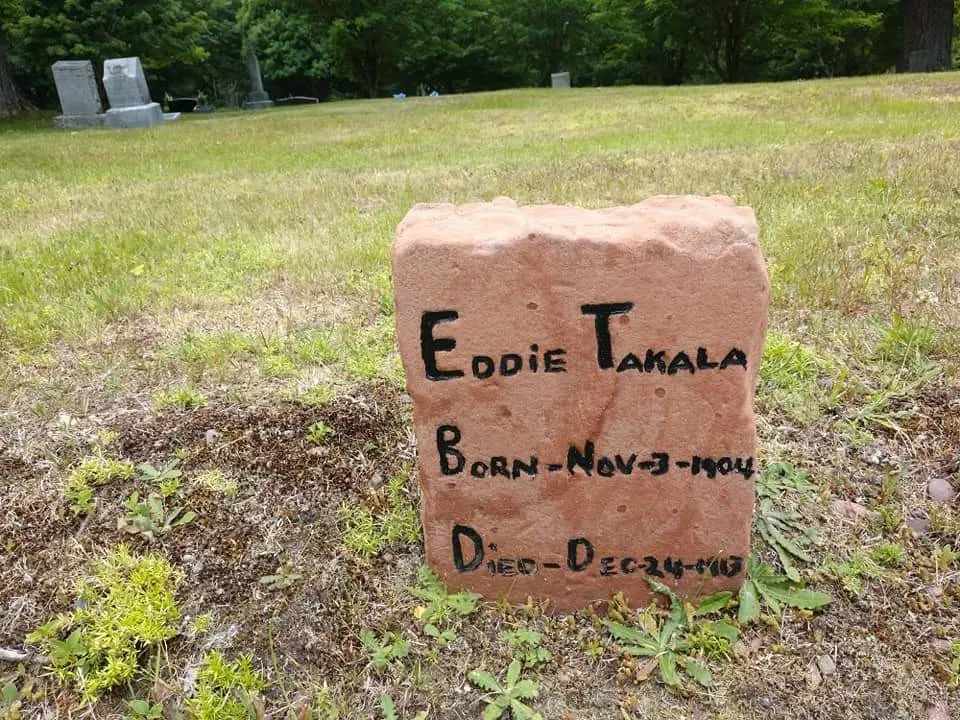
Keweenaw National Historical Park's account identifies Eddie as the son of Finnish immigrants Henry and Mary Takala. He lived in Laurium with his parents, four brothers and a sister. The family had no photographs of the children. After Eddie died, they commissioned an artist's rendering of him. That origin matters when looking at the image in the park's archive: it is a memorial portrait, not a photograph made while he was alive.[1]
The park records that the family preserved the image for more than a century before passing it to the archive. Relatives also returned to Lake View Cemetery to maintain Eddie's sandstone marker. The two objects preserve different things. One offers a likeness created for remembrance; the other records his name and dates at his burial place. Neither can explain the movement of the crowd inside Italian Hall, but both keep the child visible beyond a casualty total.[1]
A gathering during the strike
The disaster occurred on December 24, 1913, during the Copper Country miners' strike. The National Park Service describes a holiday party for striking workers and their families, followed by a reported cry of fire and a rush toward the stairway. Its historical account gives a death toll of seventy-three, including fifty-nine children. It also states plainly that the circumstances surrounding the deaths remain disputed. That uncertainty should accompany the account rather than disappear when it is retold.[2]
For the centennial, park historians examined contradictory primary sources and long-established interpretations. Their account identifies the building's later demolition as another difficulty in understanding the site. It also notes the influence of Woody Guthrie's song about the tragedy. A song, a witness statement and an architectural record do different kinds of work. Their survival together does not turn them into interchangeable proof of who caused the deaths.[2]
An entrance without its building
Italian Hall itself was a two-story brick building used by the Italian Mutual Benefit Society. Commercial space occupied the ground floor; a meeting hall and stage were upstairs. The park's site description makes clear that the fatal gathering happened in an ordinary community building, one rented to other groups. Knowing that layout supplies context for the event, but a modern description alone cannot resolve competing accounts of what happened in the stairway.[3]
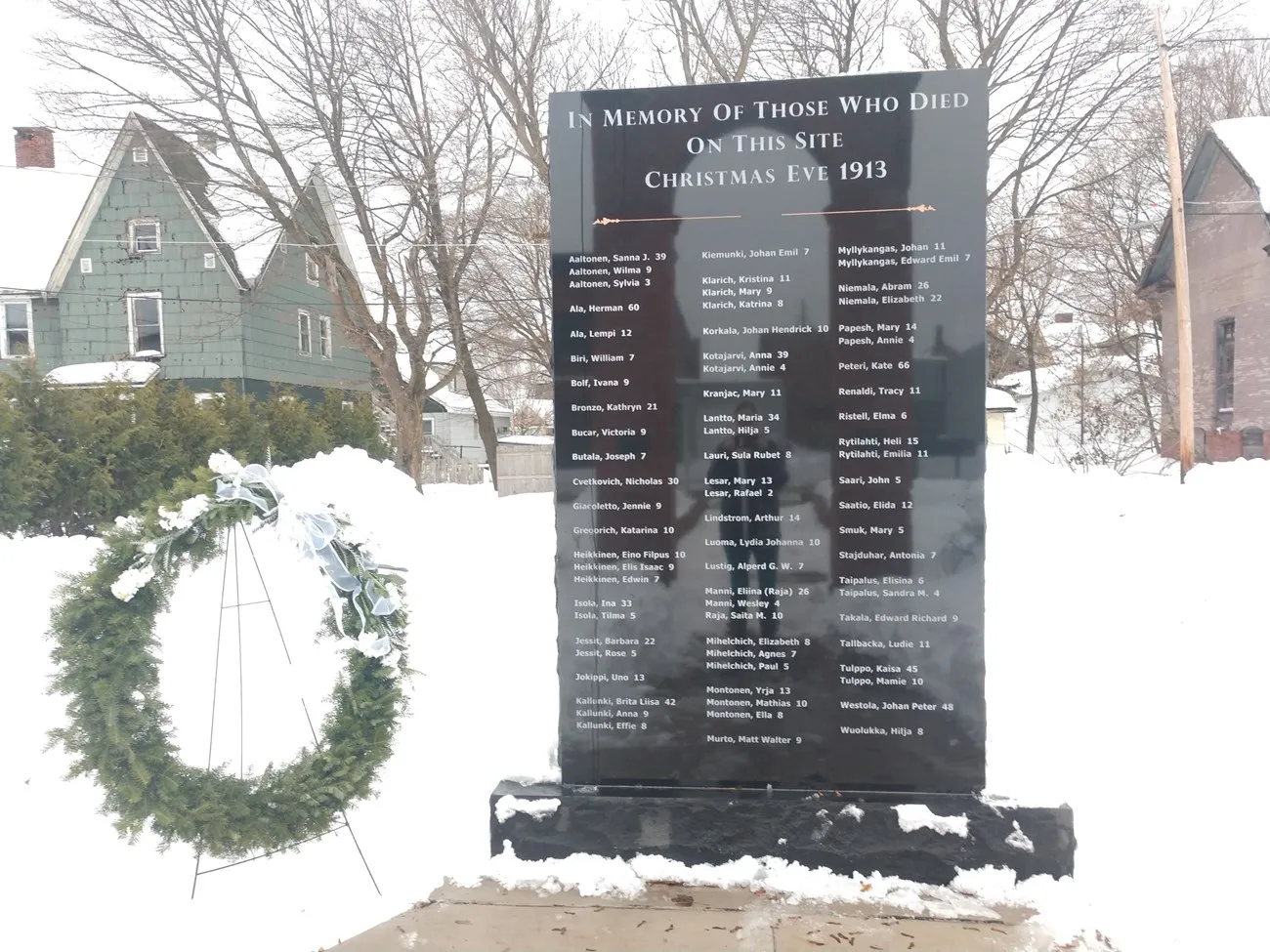
The building was demolished in 1984. Its original stone archway was repositioned within a memorial park, with a granite monument listing the dead behind it. The remaining arch therefore needs a careful caption: it is surviving fabric incorporated into a memorial, not an intact entrance to a building still standing. The changed site preserves a connection to the hall while also showing the limits of what a visitor can inspect today.[3]
Names before explanations
The memorial lists names and ages, and the park describes an annual December 24 service. Eddie appears among the people remembered there. The list turns a familiar disaster name into individual losses without requiring a visitor to choose a theory of blame first. The photographs on this page show the later memorial and the family marker; neither depicts the crowd in 1913.[3][1]
This is the value of reading the family artifact beside the public site. Remembrance can be specific even where explanation remains contested. Eddie's documented age, family and preserved portrait do not fill gaps in witness testimony, and the disputed circumstances do not make his life less knowable. The archive and memorial preserve different kinds of evidence, allowing a history of the disaster to remain both humane and honest about what it cannot settle.[1][2]
Sources and references
The death toll is attributed to the National Park Service's historical account. No disputed accusation is presented as a proven criminal finding, and no dialogue or private thoughts have been invented.
- Keweenaw Stories: Eddie TakalaUpdated December 19, 2024 · Keweenaw National Historical Park, family artifact and biographical account
Identifies the commissioned portrait, family history and preserved grave marker. The portrait is described as an artist's rendering, not a contemporary photograph.
- Remembering the Italian Hall TragedyUpdated September 12, 2017 · National Park Service account of historical research and commemoration
Records the park's death toll and explains that the circumstances remain debated. It does not identify a proven perpetrator.
- Italian Hall Memorial ParkUpdated April 11, 2024 · National Park Service site and structure description
Documents the former building, 1984 demolition, relocated arch and memorial.
This article examines the 1913 disaster through the park's documented artifacts and memorial interpretation. Sources checked October 3, 2026.