
Mississippi / Inside the court record
Curtis Flowers: the jury selection record that overturned a sixth conviction
A Mississippi murder prosecution reached the U.S. Supreme Court after six trials. The justices examined how the jury had been chosen. Read the competing arguments, the ruling and the order that sent the case back.
Read the original decisions ↓Four victims, six trials
In July 1996, Bertha Tardy, Robert Golden, Carmen Rigby and Derrick Stewart were killed at Tardy Furniture in Winona, Mississippi. All four worked at the store. The state charged Curtis Flowers with murder in 1997. The prosecution returned to trial six times, always with the same lead prosecutor, Doug Evans.[1]
The first three trials produced convictions that the Mississippi Supreme Court reversed. The first two reversals concerned prosecutorial misconduct during trial; the third concerned racial discrimination in jury selection. The fourth and fifth juries could not agree on a verdict. In 2010, the sixth jury convicted Flowers and he was again sentenced to death. That jury had eleven white members and one Black member.[1]
The next dispute focused on the people excluded before that jury heard the evidence. Flowers argued that the prosecution had again removed prospective jurors because they were Black. Mississippi maintained that the strikes rested on legitimate reasons specific to each person. The written briefs show why the same record led the two sides to sharply different conclusions.[2][3]
What each side asked the Court to see
The governing rule came from Batson v. Kentucky. A prosecutor may use a peremptory challenge to remove a prospective juror, but may not do so because of race. A disputed strike requires more than an explanation that sounds neutral. The trial judge must decide whether the stated reason is genuine or conceals discrimination.[3][1]
Flowers's lawyers asked the justices to examine the accumulated evidence. Their brief connected the prosecutor's earlier jury selections with the way he questioned and investigated Black and white prospective jurors at the sixth trial. They argued that reviewing each explanation separately concealed the pattern visible when those details were considered together.[2]
Mississippi urged the Court to respect the trial judge's findings. Its brief argued that the earlier discrimination had already been considered and did not automatically establish a violation in the sixth trial. The state also distinguished this record from cases containing prosecution notes or other direct documentary signs of racial bias. These were the state's arguments for keeping the conviction in place.[3]
The disagreement sharpened during oral argument on March 20, 2019. Justice Brett Kavanaugh confronted the state's lawyer, Jason Davis, with the accumulated figure of 41 strikes against 42 Black prospective jurors. Davis acknowledged the figure and agreed that history mattered, while continuing to defend the individual strikes. The exchange shows that the dispute concerned the weight of the history, as well as the explanations offered for the latest jury selection.[4]
Carolyn Wright and the comparison that mattered
Carolyn Wright was one of the Black prospective jurors the state struck in the sixth trial. The prosecution pointed to her acquaintances among defense witnesses, employment at the same Walmart as Flowers's father, and an old debt lawsuit involving Tardy Furniture. Wright said the debt had been paid and would not affect her evaluation of the case.[1]
The majority compared Wright with white prospective jurors the prosecution had accepted. Some also knew numerous people involved in the case or had connections with Flowers's family. Yet the prosecution had not pursued those connections with the same individual follow-up questioning. The comparison concerned the state's choices; some of those white prospective jurors were later removed by the defense.[1]
The questioning figures gave that comparison added force. The majority counted 145 questions to the five Black prospective jurors the state struck, compared with twelve questions to the eleven white jurors who were seated. These figures concerned the individual questioning discussed in the opinion. They did not mean that the white jurors had received no group questioning.[1]
The Court also noted an incorrect explanation: the prosecutor said Wright had worked with one of Flowers's sisters. The trial judge immediately corrected that claim. The majority considered the mistake alongside other inaccurate explanations, the questioning disparity and the earlier trials. Its decision rested on that combined record, rather than declaring any one statistic or mistake sufficient by itself.[1]
A divided Court, a specific ruling
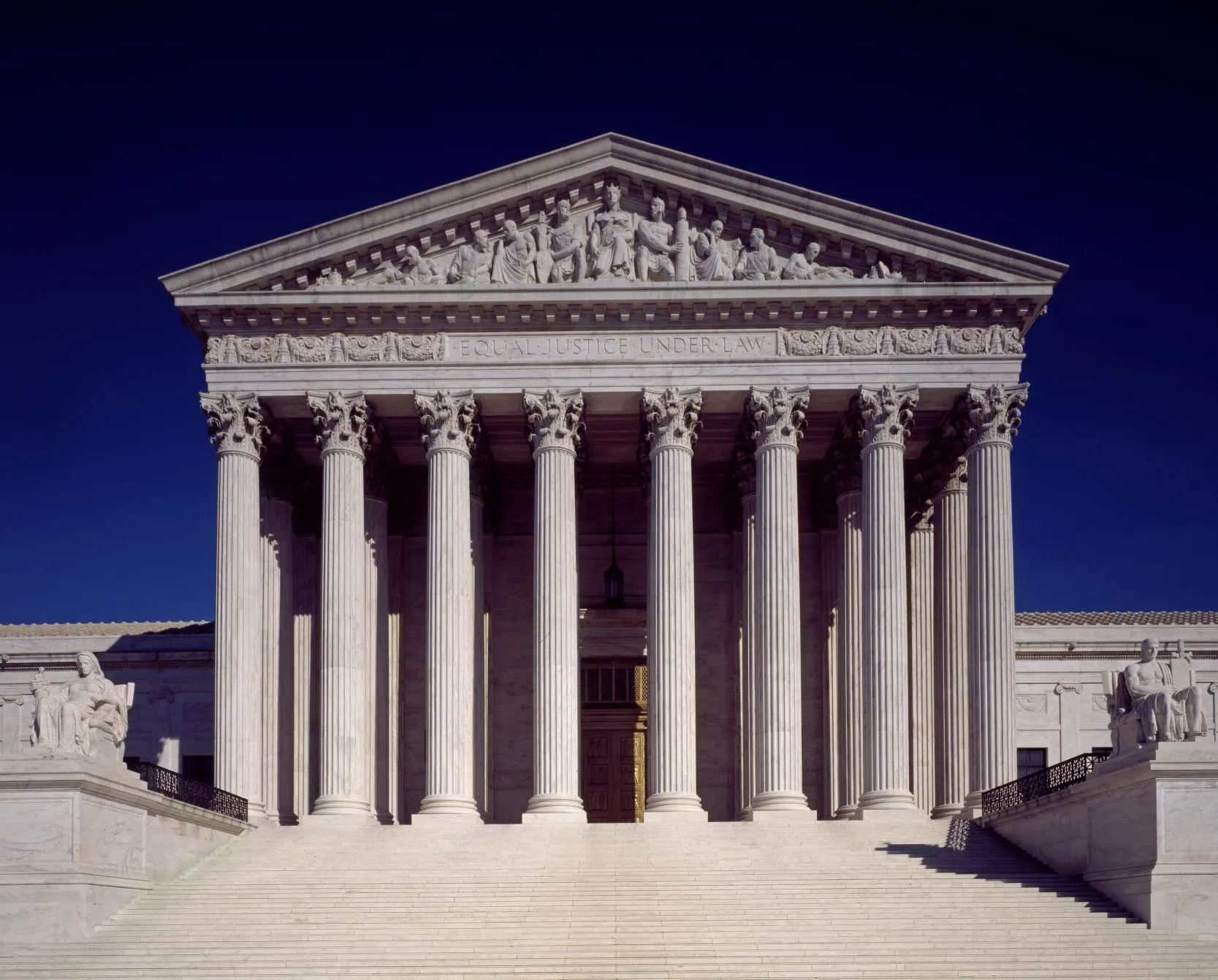
On June 21, 2019, seven justices voted to reverse. Kavanaugh's majority opinion held that the trial court had clearly erred in finding that the strike of Wright was not substantially motivated by discriminatory intent. The ruling applied Batson to the circumstances of this prosecution. It did not decide who committed the murders.[1][5]
Justice Samuel Alito joined the majority but wrote separately to emphasize the unusual combination of repeated trials, the same prosecutor and the community's many personal connections. Justice Clarence Thomas dissented. He disputed the comparison between Wright and the white prospective jurors, pointing to differences in their connections with witnesses and the victims' families. Justice Neil Gorsuch joined Parts I through III of Thomas's dissent.[1]
Reading the separate opinions helps explain the disagreement. The majority treated the accumulated history as essential to judging the latest explanations. Thomas argued that the record supported the state's individual reasons and did not justify overturning the trial judge's finding. Alito agreed that the full combination of circumstances required reversal, while stressing how exceptional the case was.[1]
What happened after the reversal
Mississippi's next decision was only two pages long. On August 29, 2019, its Supreme Court reversed the circuit court's conviction and sentence and returned the case for a new trial consistent with the U.S. Supreme Court's opinion. That order is an important part of the record: the reversal had opened the way for another trial, rather than ending the prosecution.[6]
A seventh trial did not follow. On September 4, 2020, after the Mississippi Attorney General's Office reviewed the case, the state sought dismissal and Judge Joseph Loper granted it. APM Reports documented the dismissal and linked the motion and signed order. Its reporting described the collapse of the available prosecution evidence. The dismissal with prejudice brought the prosecution to an end.[7][8]
The record therefore has two distinct endpoints. The 2019 opinions explain why the sixth conviction could not stand. The 2020 dismissal ended the effort to try Flowers again. Together they show how a case can move from a challenge to one juror's exclusion to the reversal of a death sentence, and then to the end of the prosecution.[1][6][7]
Sources and page references
Page references in the article use printed document pages unless marked “PDF.” Briefs state a party's position; the majority opinion records the Court's holding.
- U.S. Supreme Court: Flowers v. Mississippi, majority, concurrence and dissentJune 21, 2019 · Judicial opinions
78 PDF pages. Majority begins on PDF page 4; Alito concurrence on page 35; Thomas dissent on page 37.
- Brief for Curtis FlowersDecember 27, 2018 · Party's argument
The petitioner's position, with citations to the underlying record. Statements in a brief are arguments, not findings by the Court.
- Brief for the State of MississippiFebruary 7, 2019 · Party's argument
The state's reasons for defending the conviction. Read alongside the majority and dissent, which address the contested explanations.
- Official Supreme Court oral-argument transcriptMarch 20, 2019 · Argument transcript
The exchanges cited here appear on printed pages 31–33, PDF pages 32–34. Questions from justices are not the final judgment.
- Official Supreme Court docket, No. 17-95722018–2019 proceedings · Docket
Links to the filings, the limited question accepted for review, the argument date and disposition.
- Mississippi Supreme Court: decision on remand, No. 2010-DP-01348-SCTAugust 29, 2019 · Judicial decision
Two pages. Paragraph 1 reverses the conviction and sentence and orders a new trial.
- APM Reports: Charges against Curtis Flowers are droppedSeptember 4, 2020 · Reported follow-up
Contemporaneous reporting on the dismissal, with links to the motion and signed order. The 2020 outcome here is supported by reporting; those filings are not included in our downloaded court appendix.
- American Bar Association: After Twenty-Three Years, Mississippi Drops All Charges Against Curtis FlowersFall 2020 · Legal reporting
Corroborates the dismissal with prejudice and explains that the Supreme Court had previously ordered further proceedings.
Court records and the reported September 2020 dismissal checked October 2, 2026. This article examines the criminal prosecution and jury-selection appeal.