
Mississippi / Places and memory
What survives in the Evers family garden
The oak Medgar Evers planted beside his driveway is no longer beside the driveway. Preservation records place it on nearby park property, moved there in 1996. The original garden plants are gone, but the brick planter remains. Those differences make the National Park Service’s landscape history a useful guide to the Evers home: it shows what survives, what has changed and how later memories help recover a family’s ordinary life.
Read the original court record ↓A place they chose
The Everses bought the house in 1956 in Jackson’s Elraine subdivision. The neighborhood offered Black families something segregation had denied them elsewhere: modern houses, generous yards and city services. The park’s landscape history identifies African American developers Winston J. Thompson and Leroy Burnett as the people who developed Elraine between 1955 and 1957. The address was then 2332 Guynes Street; the street is now named for Margaret Walker Alexander.[1][2]
That setting matters. A home associated with an assassination can become fixed in the moment of violence, as if nothing happened there before it. The landscape record restores other uses: children playing, neighbors visiting, plants chosen and tended. The front yard expressed pride and welcome. The family’s reasons for wanting a house were not reducible to the danger that followed them.[2]
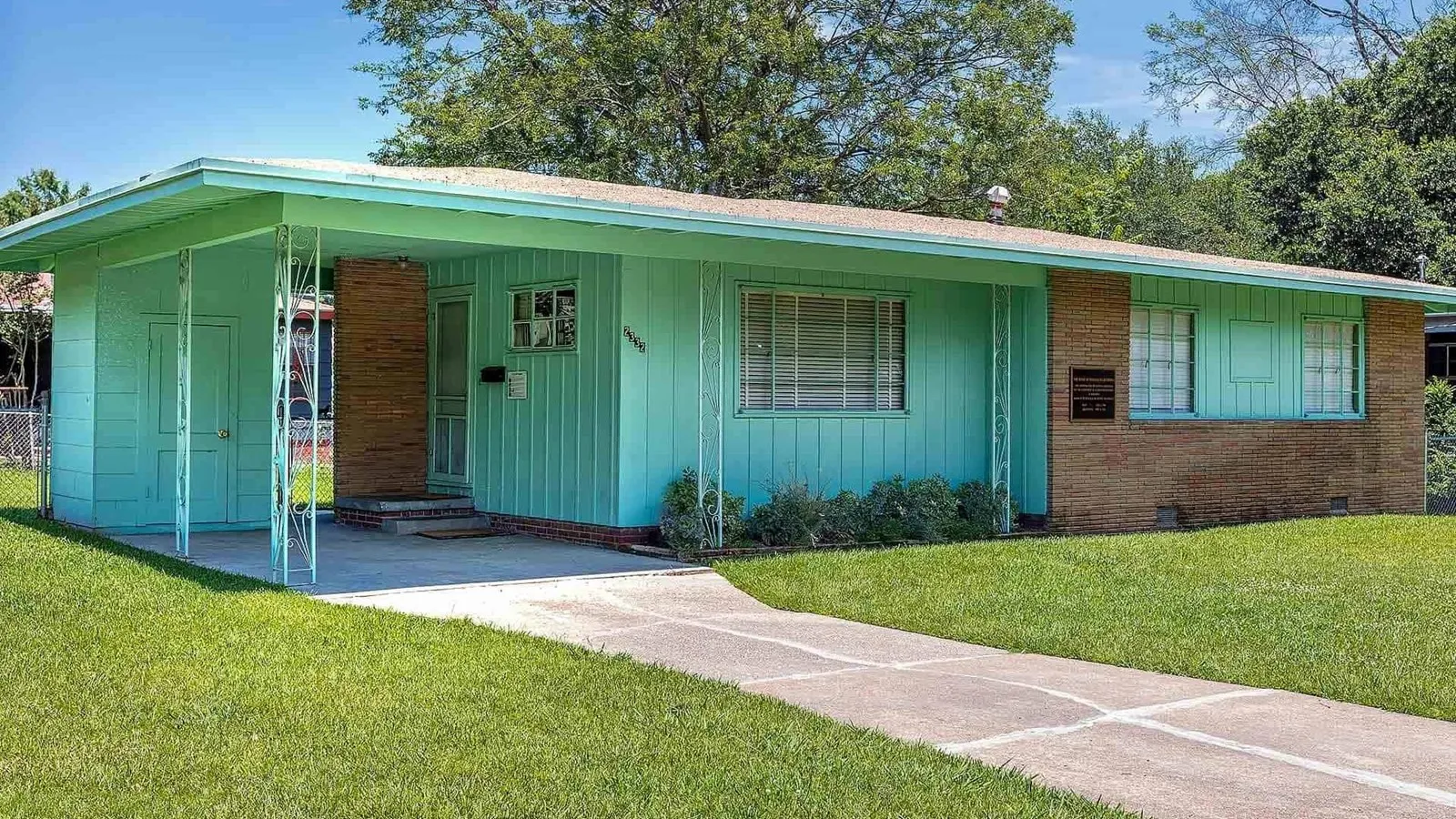
Reconstructing a planted landscape
The park’s account does not pretend that every planting can be identified with equal certainty. Historic photographs show the shapes and positions of beds; interviews supply remembered species. Its planting-area descriptions sometimes use cautious terms such as “may have included.” That distinction lets a reader separate a documented bed from a later recollection of the flowers that grew in it.[2]
The Roman brick planter below the picture window is one example. The structure remains, but the planting material changed after the family’s period of residence. Oral interviews suggest roses among its historic plants. Preserving the container and documenting its changing contents are different tasks. Both contribute to an honest account of the property.[2]
The garden keeps a different record
The landscape history draws on interviews with Myrlie and their daughter Reena, historic photographs and later preservation research. It describes an ornamental front garden and vegetables grown in the back. Darrell helped his father mow the lawn. Medgar planted a live oak beside the driveway. Such details are useful because they locate care and labor in the property, rather than treating every visible feature as a symbol of the murder.[2]
The account is careful about what survives. The original plants are no longer in place. The oak was moved to nearby park property, while the Roman brick planter remains at the front of the house. A visitor looking at the present lawn is seeing a preserved landscape with changes, not a scene untouched since 1963. The planting-area descriptions distinguish documented features from species recalled in later interviews.[2]
Preserving the home and the crime’s history
A gunman shot Medgar Evers at the house just after midnight on June 12, 1963. Two trials of Byron De La Beckwith ended with hung juries in 1964. In 1994, a jury convicted him and he received a life sentence. Those outcomes belong in the account, but they do not exhaust what the home preserves. The park’s separate histories of the investigation and the landscape give readers different ways to understand the same place.[3]
A surviving planter and a relocated oak invite a different kind of attention from a marker that names a murder. They ask how the family used the space and what can still be recovered from it. The garden cannot replace the criminal record. It can keep that record from becoming the only way to remember a home built around work, neighbors and children.[2]
Sources and references
Independently researched companion article, written from the linked primary records.
- National Park Service: Evers Family HomeJune 10, 2023 · Official site interpretation and building history
Read the sections on the house, home security and organizing work.
- National Park Service: Medgar and Myrlie Evers’ Yard and GardenFebruary 7, 2025 · Official cultural landscape interpretation
Distinguishes surviving landscape features from historic photographs and later oral-history recollections.
- National Park Service: Long-Delayed JusticeJune 13, 2022 · Official case interpretation
Documents the investigation, mistrials and 1994 conviction.
This article reads the preserved home through the National Park Service’s building and landscape records. The photograph shows the preserved property, not its appearance on the night of the crime.