
New Hampshire / Investigative history
Exeter’s hepatitis investigation: why 12,000 people were told to seek testing
More than 12,000 people were advised to seek testing during the investigation of hospital technician David Kwiatkowski. That figure describes the reach of a public health inquiry, not 12,000 infections. Following the distinction through the federal records shows how investigators moved from a small New Hampshire cluster to a crime that crossed hospital and state boundaries.
Read the original court record ↓Four diagnoses opened the inquiry
The FBI’s account begins in May 2012, when New Hampshire health officials learned of four people newly diagnosed with hepatitis C. Three had been patients in Exeter Hospital’s cardiac catheterization laboratory. The fourth worked there: Kwiatkowski. Testing found genetically similar virus in all four, pointing investigators toward a common source rather than four unrelated diagnoses.[1]
Kwiatkowski had worked as a traveling technician in several states. Investigators therefore had to look beyond the hospital where the cluster was recognized. His employment history became a way to identify other places where patients might have encountered him. Health authorities in those states began their own reviews, with the Centers for Disease Control and Prevention coordinating the broader inquiry.[1]
Notification was a search, not a verdict
The more-than-12,000 testing recommendation was intended to find possible infections among people who might have crossed paths with him. It did not establish that every person notified had received contaminated medication. In the sentencing announcement of December 2, 2013, prosecutors instead listed 45 patients whose viral strains had been genetically linked to Kwiatkowski’s: 32 at Exeter and 13 at facilities in Kansas and Maryland.[2]
The announcement separately described another person with a personal relationship to an Exeter patient who had acquired the same strain. Keeping that person separate from the 45 patients preserves the categories used by the record. It also avoids treating a dated tally as an unlimited claim about everyone ultimately affected. The testing notice, the confirmed patient count and the secondary infection answered different questions.[2]
Public health and criminal evidence
Health investigators worked to determine how transmission had occurred and ruled out other possible routes. The FBI opened a full criminal investigation in June 2012. Searches and interviews followed, including a vehicle search that recovered needles and syringes. The federal account describes cooperation with health agencies and interviews with both coworkers and patients. The inquiry needed the employment trail, laboratory findings and evidence about what happened in clinical settings.[1]
Kwiatkowski ultimately pleaded guilty to obtaining controlled substances by fraud and tampering with a consumer product. Prosecutors described the theft of fentanyl intended for patients and the substitution of contaminated syringes. They stated that he knew of his infection by June 2010 at the latest. Patients were exposed to infection while being deprived of the medication intended for their procedures.[2]
Reading past a mistake in the announcement
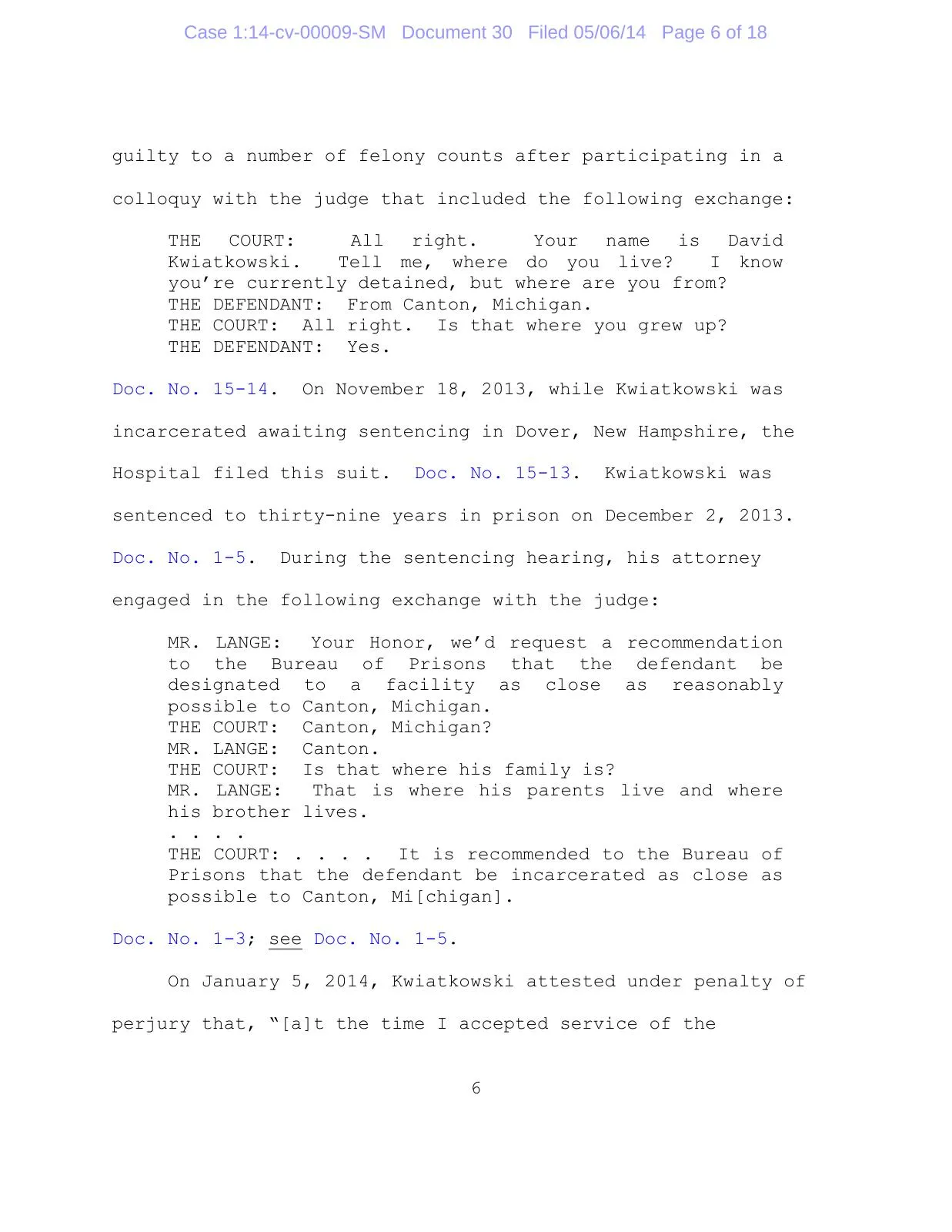
One detail requires cross-checking. The Justice Department release begins by reporting a 39-year sentence, then refers to 40 years lower down. The FBI’s later account consistently gives 39 years. A subsequent federal court opinion, filed in a separate civil jurisdiction dispute, also records that Kwiatkowski was sentenced to thirty-nine years on December 2, 2013. That court record resolves the inconsistency without silently repeating the stray figure.[3]
The historical testing recommendation is not a present-day medical notice. Its importance here is investigative: officials began with four diagnoses, followed a worker’s movements and asked a much larger group to help establish the extent of exposure. A large notification number can be alarming without being a count of confirmed harm. Reading the records carefully gives both the patients and the investigation a more accurate account.[1]
Sources and references
Independently researched companion article, written from the linked primary records.
- FBI: investigation and 39-year sentence in the hepatitis C outbreakDecember 20, 2013 · Primary investigating agency account
The testing recommendation and infection counts are historical, not current medical guidance.
- U.S. Attorney: Kwiatkowski sentencing announcementDecember 2, 2013 · Primary prosecution announcement
Contains an internal 39/40-year inconsistency. This article verifies 39 years against the FBI and later court record.
- Exeter Hospital v. Kwiatkowski, civil jurisdiction orderMay 6, 2014 · U.S. District Court order
Complete 18-page order. Page 6 independently records the criminal sentencing date and term; this was not the sentencing judgment.
The health notifications and patient totals are those reported in 2012-2013. This historical article does not advise readers about present testing or make a claim about current custody.