New Jersey / Inside the court record
The Lindbergh evidence: what the DNA-access ruling actually decided
The ransom letters survived the investigation, the trial and an execution. Nearly a century later, researchers wanted to examine what might remain beneath their seals. The resulting appeal turned on who had asked for access, and when.
Read the original court record ↓A note in an empty nursery
Charles Augustus Lindbergh Jr. was twenty months old when he disappeared from his family’s New Jersey home on March 1, 1932. A note left on the nursery windowsill demanded $50,000. The family paid a ransom through an intermediary, but their son was not returned. His body was found on May 12, several miles from the house. For Charles and Anne Morrow Lindbergh, the search ended in the death of their child.[2]
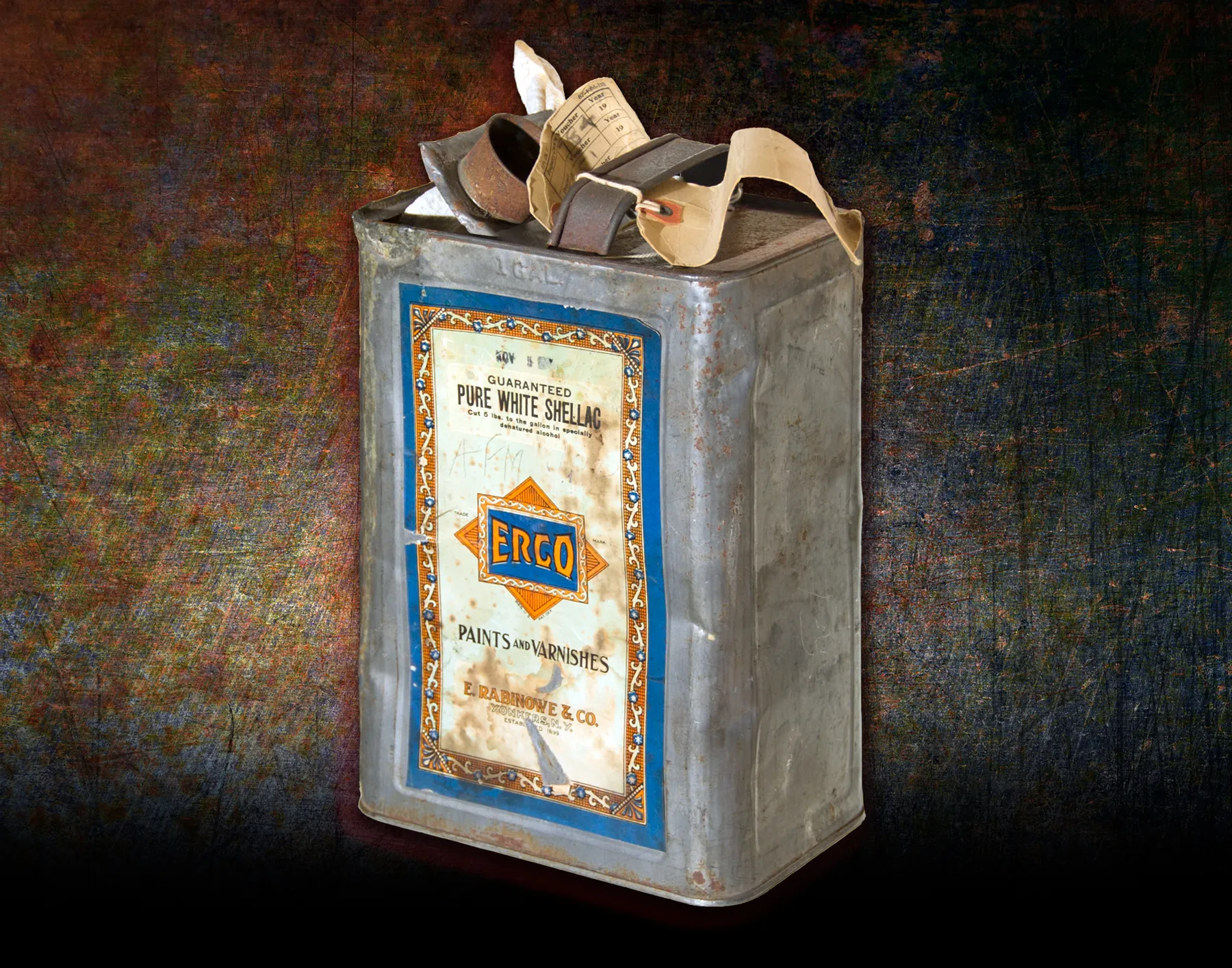
The money remained traceable. In September 1934, a gas-station attendant accepted a $10 gold certificate that had been included in the ransom and recorded the customer’s license plate number. Investigators followed that clue to Bruno Richard Hauptmann. More ransom currency was recovered from his garage, including certificates concealed in a gas can. The can survives as a physical reminder of how an ordinary purchase helped investigators find their suspect.[3]
At trial, the prosecution also relied on handwriting comparisons and evidence linking the discarded ladder to Hauptmann’s tools and attic wood. A jury convicted him of first-degree murder in February 1935. He was executed on April 3, 1936, maintaining his innocence. Decades later, that conviction would be the background to a different court case about access to the evidence.[2][1]
.jpg)
What lay beneath the seals
By the time of the modern litigation, the New Jersey State Police Museum held roughly 225,000 documents and other materials associated with the case. The appellate opinion describes envelopes protected by polyester sleeves, acid-free folders and archival boxes, inside a room with controlled temperature and humidity. Governor Brendan Byrne’s 1981 executive order had opened the collection to public research while allowing procedures to protect it from damage.[1]
The request that started this dispute arrived in March 2022. Filmmaker Michael Braverman wanted DNA testing of fourteen envelopes, eleven stamps and a piece of wood. The State Police refused. Researcher Margaret Sudhakar subsequently brought suit, seeking to compel access under New Jersey’s Open Public Records Act, the common law and Byrne’s order. The proposed inquiry concerned who had licked the stamps and sealed the ransom envelopes.[1]
That was a different kind of examination from reading a letter through a protective sleeve. Forensic specialist Arthur Young proposed applying a chemical fluid to neutralize adhesive, opening sealed areas, collecting samples and attaching the paper again with new adhesive. He described the method as non-destructive. According to the opinion, however, it had been tried once on an envelope from 2002, and he could not rule out damage to the older material.[1]
The preservation dispute
The state’s experts objected to altering the artifacts. The director of the State Police Office of Forensic Sciences said the proposed tests would permanently change the items and might damage them. A museum official described rules against exposing artifacts to foreign chemicals or changing their condition. The disagreement was over a particular proposed method and its effect on irreplaceable paper, not simply whether modern science had anything to offer the case.[1]
In January 2023, the trial judge dismissed Sudhakar’s complaint. He identified a procedural problem and also rejected her claim that public-access rights entitled her to the requested testing. By the time the case reached the Appellate Division, the request involving ladder wood had been abandoned. The appeal therefore concerned the envelopes and stamps, not permission to test every surviving object.[1]
Why the appeal failed
The sequence of requests mattered. Braverman had asked for access, but he was not named as a plaintiff in Sudhakar’s September 2022 lawsuit. Sudhakar did not submit her own records requests until December, after she had already sued. When those requests were denied, she did not seek permission to amend her complaint to challenge the denials. Instead, she asked informally for them to be folded into the existing case.[1]
On December 23, 2024, the appellate panel affirmed the dismissal. Under the version of the records law it applied, the right to challenge a denial belonged to the requester. Sudhakar’s later requests were not properly before the trial court. Treating the lawsuit as a challenge to Braverman’s earlier denial would not save it either: that challenge was outside the applicable forty-five-day deadline.[1]
The opinion stops there. The panel expressly declined to go further into the substance of the testing request because the procedural defects disposed of the appeal. The Government Records Council’s January 2025 meeting minutes likewise summarized the result as a procedural failure. The appellate judges did not declare that DNA testing could never be allowed, and they did not re-examine Hauptmann’s guilt.[1][4]
An old case, an unfinished argument
The distinction matters when reading the later coverage. In April 2025, the Jersey Vindicator reported a new lawsuit by three researchers seeking access to the archive amid renewed calls for DNA testing. By June 2026, the Free Press was still reporting on attorney Kurt Perhach’s effort to obtain DNA access. Those later efforts should not be collapsed into the eleven-page decision issued in 2024. This article does not claim a verified final outcome for the later litigation.[5][6]
The 2024 decision is also marked nonprecedential: it binds the parties, but its use in other cases is limited. Its value here is as a record of what was requested, what officials and experts said, and why this particular appeal failed. It contains no DNA results. A proposal to test evidence, a dispute about preserving it and a court ruling on access remain separate steps. None can stand in for a laboratory finding.[1]
Sources and page references
Page references in the article use printed document pages unless marked “PDF.” Briefs state a party's position; the majority opinion records the Court's holding.
- Sudhakar v. New Jersey State Police, A-1764-22December 23, 2024 · Appellate court opinion, nonprecedential
Procedural affirmance. Pages 5–8 recount the testing proposal and trial ruling; pages 9–11 explain the appellate disposition. Saved court-issued PDF retrieved from Justia’s archive after the court host blocked downloads.
- FBI: Lindbergh kidnappingUndated; accessed October 2, 2026 · Investigative history
Supports the kidnapping, ransom, recovery of the child’s body, trial evidence, conviction and execution. The article does not adopt this page’s disputed trial-start date or appellate-court label.
- FBI: Lindbergh kidnapping gas canSeptember 2017 artifact feature · Evidence identification
Identifies the recovered can and explains the ransom-currency lead. Its historical display-location wording is not a current museum-location claim.
- New Jersey Government Records Council: January 28, 2025 meeting minutesJanuary 28, 2025 · Official state meeting record
Page 10, section X summarizes Sudhakar’s appellate disposition as procedurally deficient. The filename carries a later meeting date; the document itself identifies January 28.
- Jeff Pillets: Researchers sue New Jersey over access to Lindbergh kidnapping recordsApril 28, 2025 · Contemporary reporting
Used for the filing of a new lawsuit in 2025. The 2024 court’s own opinion controls this article’s description of that earlier ruling.
- Joe Nocera: Could 2026 Finally Close the Case?June 26, 2026 · Dated reporting, public introduction
The publicly available introduction describes Perhach’s continuing effort to obtain testing. The full subscriber episode was not used; this is not a verified court-docket update.
Checked October 2, 2026. The article explains the December 2024 appeal under the version of OPRA identified in that opinion, before the 2024 amendments. Later efforts are dated and attributed to reporting; no final outcome of the later litigation has been independently verified here.