
North Dakota / Inside the court record
The Wilder appeal: an improper argument and a conviction that stood
The North Dakota Supreme Court agreed that prosecutors had crossed a constitutional line in Richie Wilder’s murder trial. It nevertheless upheld his conviction for killing Angila Wilder. The April 10, 2018 decision is useful precisely because those conclusions sit together: identifying an improper argument was the beginning of the appellate analysis, not its end.
Read the original court record ↓The inference the prosecutor asked for
During closing argument and rebuttal, the State questioned why Wilder had not told police about an alternative account that he had given a jail cellmate. The prosecutor invited jurors to infer that an innocent person would have reported that story and that Wilder’s failure to do so showed guilt. The court held that this improperly used his post-arrest silence after Miranda warnings.[1]
The opinion explains that Wilder had spoken with investigators on more than one occasion. That did not resolve the question. The challenged argument concerned what he had failed to report after arrest and warnings. The distinction was between assessing evidence actually presented and treating protected silence as an additional reason to convict.[1]
The assurance behind the rule
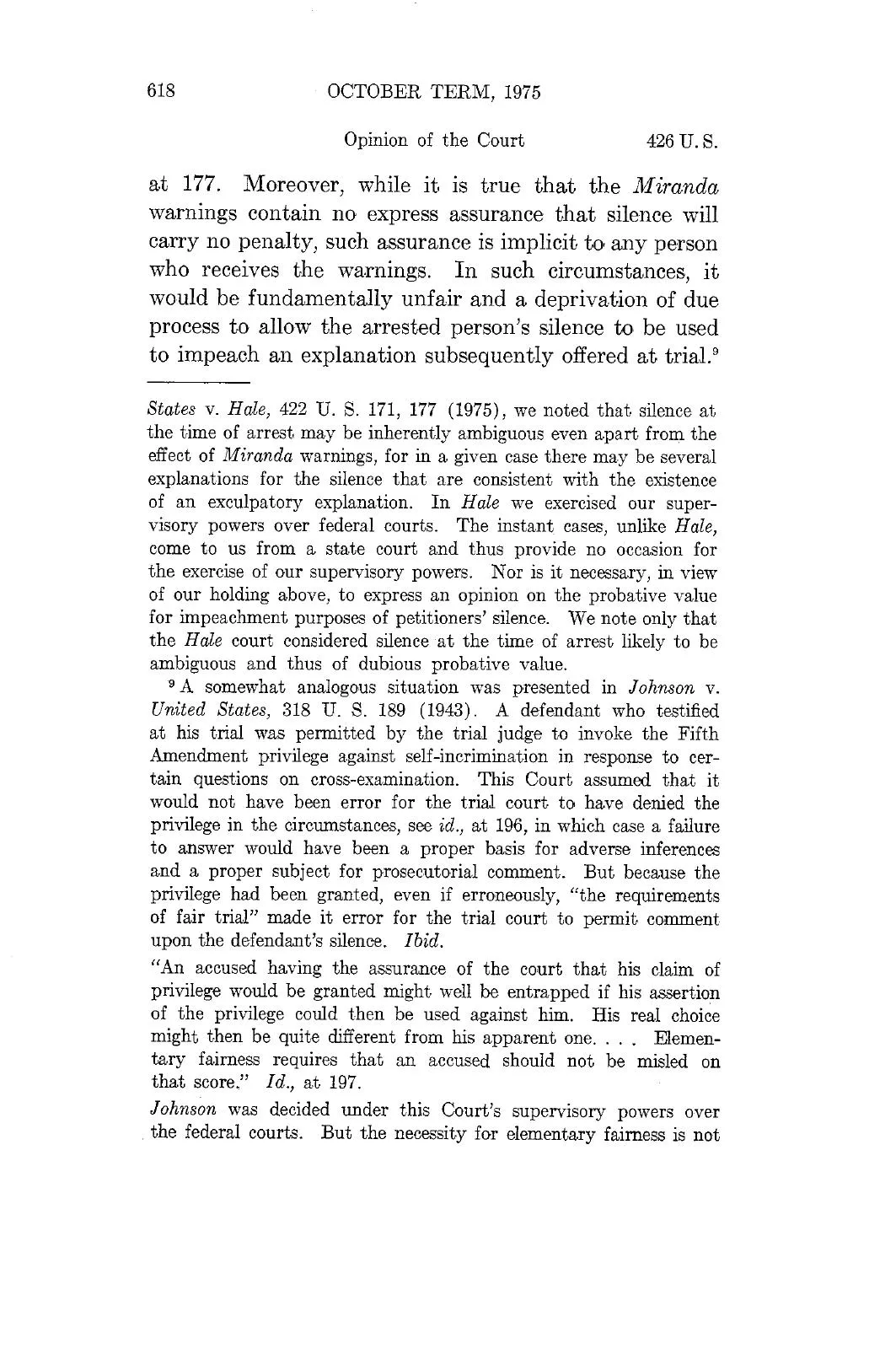
The court relied on Doyle v. Ohio, the United States Supreme Court’s 1976 decision about using post-warning silence to challenge a defendant’s trial explanation. Doyle reasoned that a warning about the right to remain silent carries an implicit assurance against penalizing that choice. Its rule concerns silence after the warnings, not a general ban on examining contradictory accounts.[2][1]
Doyle’s majority reversed the convictions before it, and its complete opinion includes a dissent. Wilder’s appeal required an additional inquiry: whether the improper remarks affected this verdict. The North Dakota court placed the burden on the State to prove beyond a reasonable doubt that they did not contribute to it.[1][2]
What the judges weighed
The court considered how the silence was used, who pursued the subject, the strength of other evidence, the remarks’ frequency and intensity, and the trial judge’s opportunity to respond. Wilder had not objected or requested a mistrial. That absence did not prevent appellate review of the constitutional error, but it meant the trial judge had not been given the opportunity to address it.[1]
Other evidence mattered heavily. The opinion describes Wilder’s admission that he was present, a cellmate’s testimony that Wilder confessed, video contradicting his attempt to blame another person, and biological evidence. It carefully states a limitation of the Y-chromosome testing: Wilder and his paternal male relatives could not be excluded. That finding should not be rewritten as a unique identification by that test alone.[1]
The justices held the error harmless beyond a reasonable doubt after considering the record. They still called the comments improper. Harmless in this setting describes the court’s conclusion about their effect on the verdict; it does not turn the prosecutor’s argument into an approved practice. Both parts of the ruling belong in the same account.[1]
Why the disposition also says reversed
A different issue concerned a provision barring contact with Wilder’s children during imprisonment. The court held that the sentencing statutes did not authorize that addition. A victims’ rights provision had not been invoked by a request from the children or their representative, so it did not supply authority in this case. The judgment was returned for correction.[1]
That limited sentencing ruling did not undo the murder verdict. The court expressly found life without parole within the statutory range and affirmed the conviction. Reading only the words reversed and remanded would miss the central distinction: the court rejected one sentencing provision while leaving the jury’s finding of guilt intact.[1]
Sources and references
Independently researched companion article, written from the linked primary records.
- State v. Wilder, 2018 ND 93April 10, 2018 · North Dakota Supreme Court opinion, court-authored text reproduced by Justia
Complete opinion text, paragraphs 1-27; the site’s separately labeled summary was not used as the authority.
- Doyle v. Ohio, 426 U.S. 610June 17, 1976 · United States Supreme Court precedent cited in Wilder
Complete 27-page official U.S. Reports opinion, including dissent. This is the earlier precedent, not the Wilder trial record.
This article explains the disposition of the identified 2018 appeal. Its partial reversal concerned a sentencing provision, not the murder conviction. It does not describe every later proceeding or make a current custody determination.