
Tennessee / Places and memory
The Lorraine Motel: a place of welcome, then a place of memory
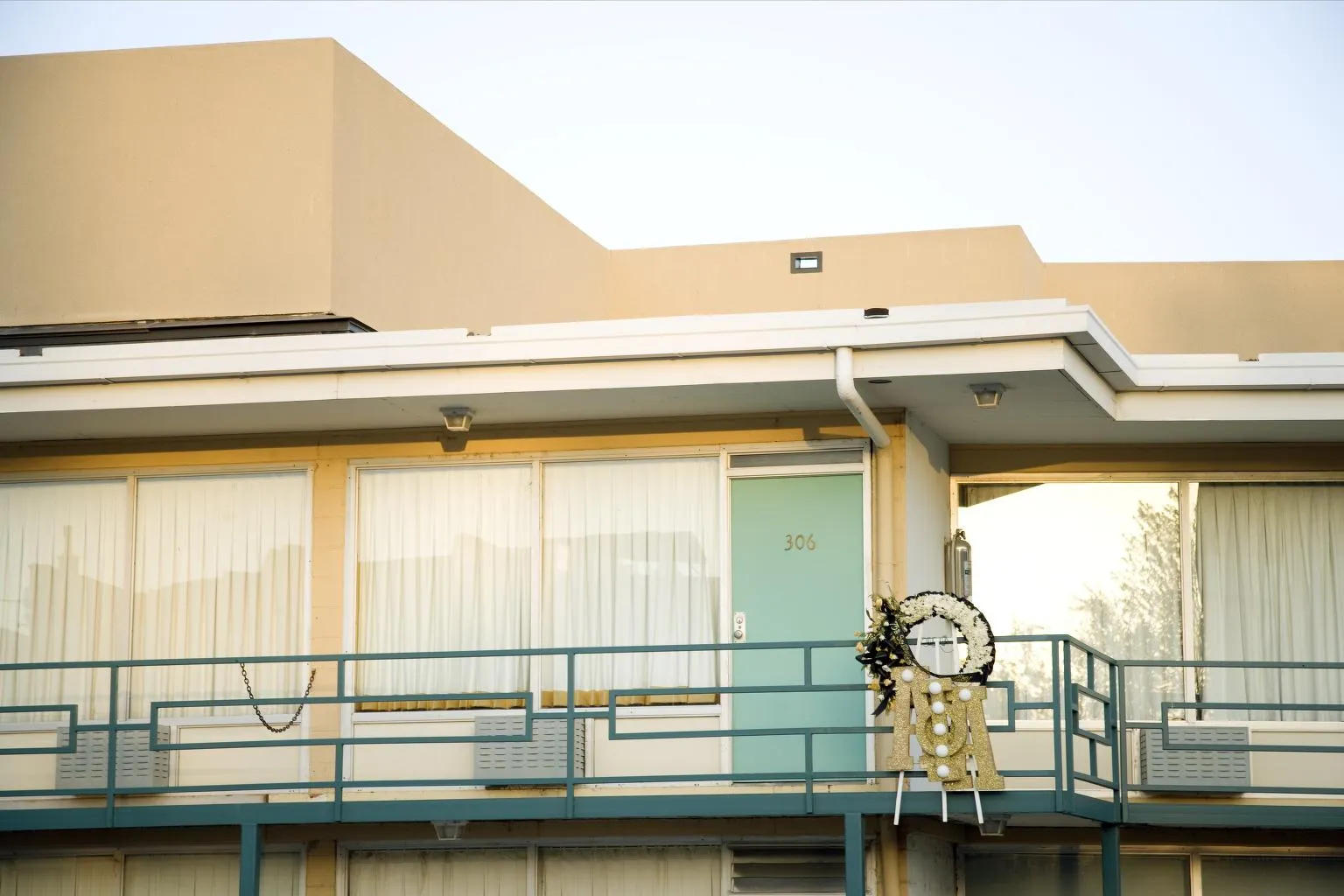
In Carol M. Highsmith’s photograph of the Lorraine Motel, a wreath rests beside the balcony railing. The number 306 remains visible on the door. Taken in 2006, the image records a place already shaped by decades of remembrance. It is neither a photograph of the assassination nor a view of an ordinary operating motel. Its subject is the survival of a building after its meaning changed.
Read the original court record ↓Before the balcony became a memorial
The National Civil Rights Museum traces the Lorraine’s modern identity to Walter Bailey’s purchase in 1945. Its name honored his wife, Loree, and the song “Sweet Lorraine.” The motel expanded under the Baileys, adding rooms and drive-up access. That business history matters: the building existed to welcome guests long before it became associated with the death of one.[2]
Segregation sharply limited where Black travelers could stay. The Lorraine offered accommodations when many other establishments would not. Musicians associated with Memphis recording culture stayed there, alongside other visitors. The museum remembers both its famous guests and its reputation for meals, affordability and hospitality. Those details restore a working establishment to a site often pictured only at the moment of catastrophe.[2][1]
Why King was in Memphis
Martin Luther King Jr. came to support striking sanitation workers in 1968. The National Park Service places approximately 1,300 workers at the center of that struggle. Their grievances concerned pay and unequal working conditions, including treatment on rainy days. This context changes the approach to the balcony: King’s presence at the Lorraine belonged to an active labor campaign, not a journey whose sole meaning was its fatal ending.[1]
King was assassinated at the motel on April 4, 1968. James Earl Ray pleaded guilty in 1969 and soon sought to withdraw the plea. The Justice Department’s later account records both facts. Neither a modern photograph nor the preservation of the room resolves the subsequent controversies about the killing. The physical place and the legal proceedings answer different questions.[1][3]
What the photograph preserves
Highsmith’s photograph draws attention to ordinary architecture: the exterior walkway, broad windows and room door. The wreath makes the memorial purpose explicit, but the lodging-house arrangement is still legible. The image allows those two histories to occupy the same frame. Visitors are looking at a place where people once arrived with luggage and plans, now marked by an absence.[4]
The photograph cannot establish how every surface looked in April 1968. It was made thirty-eight years later, and the Library of Congress dates it accordingly. That interval is part of its interest. The wreath, preserved room number and carefully maintained exterior show how the assassination was being remembered in 2006, rather than supplying a new eyewitness view of the crime.[4]
A museum around a motel
The National Civil Rights Museum opened at the former motel in 1991. Its account describes exhibits, collections and oral histories that situate the assassination within a much longer struggle. Keeping the Lorraine within that institution preserves a connection between a specific loss and the wider movement. The building remains recognizable, while the interpretation asks visitors to look beyond the balcony.[2]
The National Park Service added the Lorraine to its African American Civil Rights Network in 2018. The designation recognizes a place within a larger history of organizing against discrimination. Seen that way, the motel’s years of hospitality and King’s support for workers remain essential parts of the story. They explain the life around the site, as well as the death that made it internationally known.[1]
Sources and references
Independently researched companion article, with paragraph-level references to the records examined.
- National Park Service: The Lorraine MotelJune 18, 2020 · Primary institutional record
Institutional place history and Civil Rights Network designation.
- National Civil Rights Museum: About UsUndated institutional history · Primary institutional record
Museum history and the section The Lorraine Motel.
- Justice Department: overview of the King assassination investigationJune 2000 report · Primary institutional record
Opening overview records Ray’s plea and subsequent challenge; report conclusions are the department’s findings.
- Library of Congress: Lorraine Motel, Memphis, TennesseeApril 17, 2006 · Primary institutional record
Carol M. Highsmith photograph, item 2010630679; this is a 2006 memorial-site image.
This article addresses the specific historical record described here; it is not a complete account of every proceeding.