
Texas / Inside the archive
JFK records: a release date is not the date of the evidence
A file can appear on a government website decades after the events it describes. In the Kennedy assassination archive, that gap is part of the story. Before deciding what a newly released document proves, it helps to distinguish the document’s creation, its collection by investigators and its eventual public release. The 1992 records law was designed to make that history easier to follow.
Read the original court record ↓A collection, not a single account
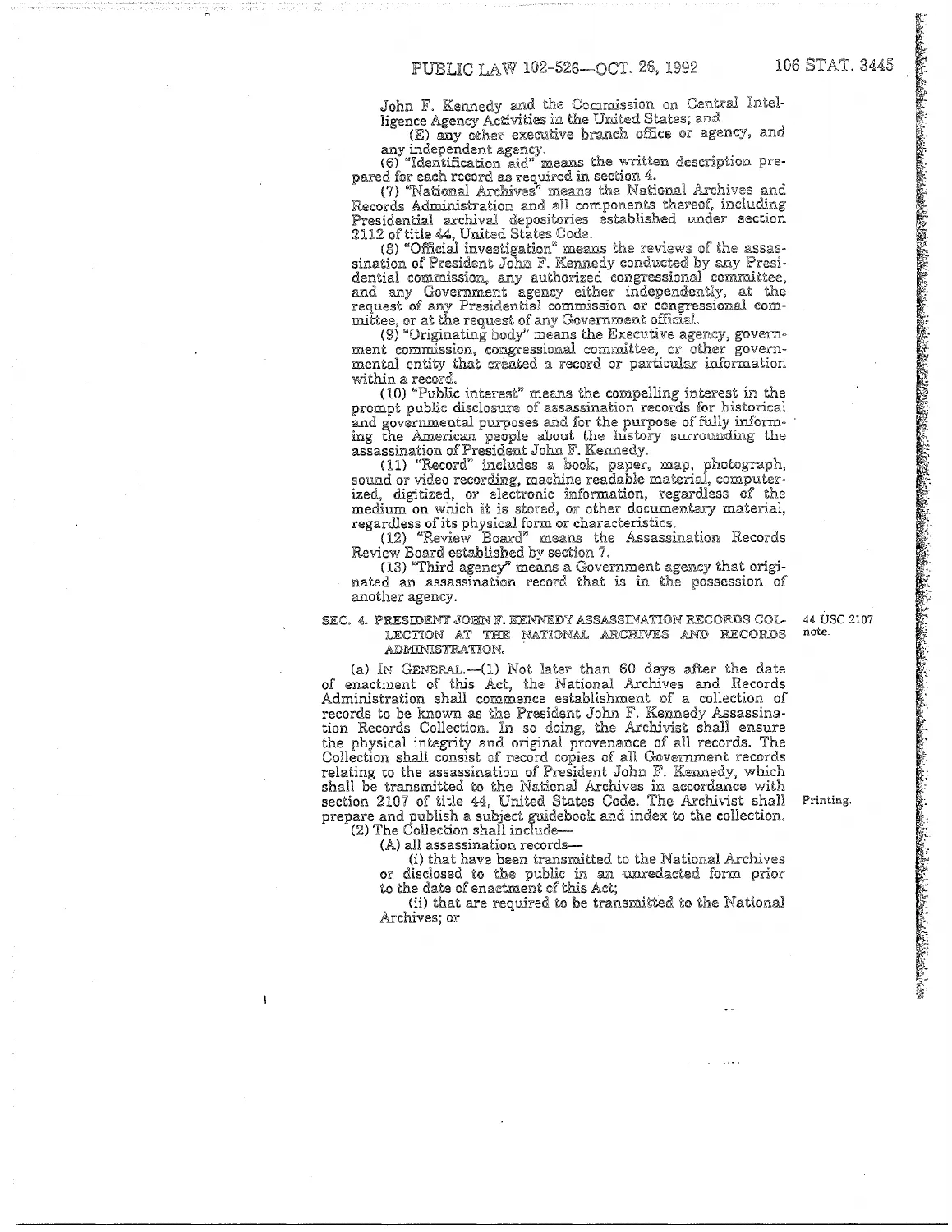
Congress enacted the President John F. Kennedy Assassination Records Collection Act on October 26, 1992. Its starting point was preservation and public disclosure. The law brought records from different investigations and government offices into a collection at the National Archives. A record could be a memorandum, photograph, map, recording or other material. Those different forms do not all answer the same questions, even when they concern the same assassination.[1]
The statute required the Archives to protect the records’ physical integrity and original provenance. Provenance is the history of where a record came from. That matters when reading a document about Dallas: an investigator’s summary, an agency’s internal message and a witness’s statement are different kinds of evidence. Finding them in one collection does not turn them into a single agreed narrative.[1]
Follow the identification number
The law called for identification aids and a central directory. Those descriptions were intended to travel with records and make information from different offices compatible. Today the National Archives’ release table uses Record Identification Form numbers in filenames. Saving the number with a citation makes a claim easier to check than saving only a screenshot of a striking sentence.[1][2]
The release page also distinguishes public access from digitization. Some material can be available in person before its online copy is posted. A page appearing online therefore need not mean the underlying record was previously unknown or legally withheld until that day. The date attached to a download describes an access event. The date and context inside the document describe something else.[2]
Read the withholding rules precisely
The 1992 law created a presumption of disclosure, but it also set standards for postponement. It required periodic review and established a twenty-five-year deadline subject to specified presidential certification. A blacked-out passage cannot, by itself, establish what the hidden words said or whether they supported a particular theory. The law supplied procedures for deciding access; it did not make missing text self-explanatory.[1]
Different restrictions also had different legal bases. The National Archives’ release page points readers to statutory provisions concerning court seals, grand-jury secrecy, tax-return information and private deeds of gift. It describes the 2025 release as covering records previously withheld for classification. That is a specific category. It should not be expanded into a claim that every imaginable record, whatever its origin or governing restriction, became identical in access status.[2][1]
What to carry away from a file
A useful reading note identifies the creator, original date, recipient, record number and page. It then separates what the author directly observed from what somebody reported to that author. This is an approach suggested by the statute’s attention to provenance and identification, not a substitute for investigating the contents. A released rumor remains a recorded rumor until other evidence supports it.[1]
The archive is valuable because readers can test accounts against surviving records. Its size is not a verdict, and a fresh release is not automatically a fresh conclusion. Following the document’s own history keeps attention on what it actually contributes: a particular observation, communication or decision that can be placed beside other evidence about Kennedy’s assassination.[1]
Sources and references
Independently researched companion article, with paragraph-level references to the records examined.
- President John F. Kennedy Assassination Records Collection Act of 1992October 26, 1992 · Primary institutional record
Complete official agency scan of Public Law 102-526,106 Stat.3443-3458.
- National Archives: JFK Assassination Records 2025 Documents ReleaseRelease series beginning March 18, 2025; subsequent additions · Primary institutional record
Official access guide and release table. Includes later additions; do not treat the page title as the date of every file.
This article addresses the specific historical record described here; it is not a complete account of every proceeding.